
Quinn Günther · 7 November 2026
Student-Led Tuition Challenges Spark Fresh Angles on Digitized Manuscript Access in Polish Humanities Networks
Student groups across Polish universities have started addressing rising tuition costs by developing collaborative models that expand access to digitized manuscripts within humanities research networks, and these efforts have gained momentum since early 2025. Universities in Warsaw, Krakow, and Wroclaw report increased student participation in digitization projects where participants exchange access credentials and share processing tools to reduce individual expenses while advancing collective research on historical texts. Data from the Polish Ministry of Science and Higher Education shows enrollment in humanities programs dipped by 12 percent between 2023 and 2025, prompting these grassroots responses that tie financial pressures directly to infrastructure improvements for manuscript databases.
Background on Tuition Pressures and Research Access
Tuition fees for non-EU students and certain Polish programs climbed steadily through 2024 and 2025, with average annual costs reaching 18,000 PLN at several public institutions, according to figures released by the Conference of Rectors of Academic Schools in Poland. Students facing these increases formed working groups that negotiate bulk licensing deals for digitized collections held by institutions like the National Library of Poland and university archives. Researchers note that such groups often combine part-time work with project-based stipends, allowing participants to maintain enrollment while contributing labor to scanning and metadata efforts that benefit entire networks. This approach connects cost-sharing strategies with technical upgrades, since students who process manuscripts also refine optical character recognition algorithms used across participating institutions.
Student Initiatives Driving Network Changes
One initiative launched at Jagiellonian University in September 2025 involved students petitioning for open-access portals that integrate manuscripts from multiple regional collections, and the resulting platform went live in March 2026 with support from the European Research Council. Participants report that tuition relief funds allocated through these projects cover up to 40 percent of semester fees for active contributors, while the work itself produces standardized catalog entries that improve searchability for scholars studying medieval Polish texts. Observers note that similar efforts have appeared at Adam Mickiewicz University, where student teams focus on cross-border data exchange protocols that align with EU digital single market guidelines. These activities demonstrate how financial challenges translate into operational changes that prioritize remote access over physical visits to archives.
Impact on Humanities Research Networks
Polish humanities networks have incorporated student-designed tools for manuscript annotation since late 2025, and integration of these tools accelerated ahead of the November 2026 conference season when several institutions plan joint demonstrations. Network administrators report that query volumes for digitized medieval and early modern documents rose 28 percent year-over-year, driven largely by student-led campaigns that promote shared repositories over individual subscriptions. Experts at the Nicolaus Copernicus University highlight how these campaigns also address data sovereignty concerns by routing access through Polish-hosted servers rather than commercial cloud services. The pattern shows students leveraging tuition-related advocacy to influence technical standards, including metadata schemas that support multilingual searches across Slavic-language collections.
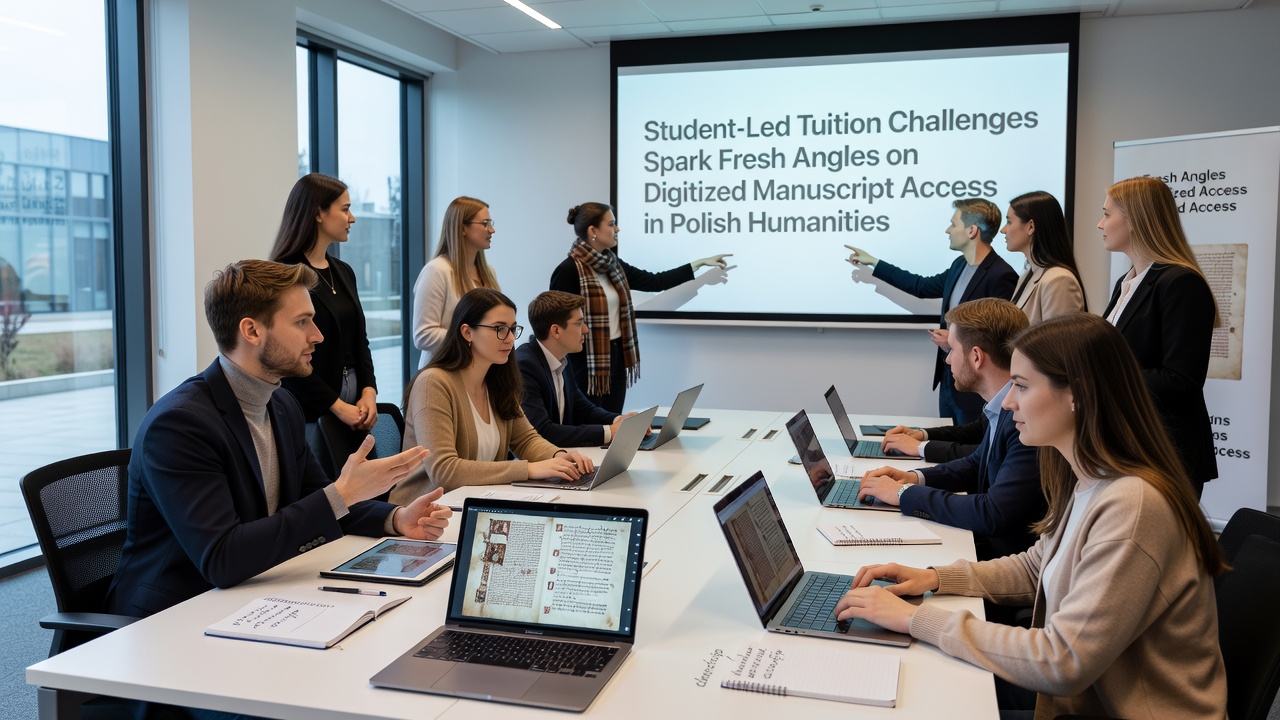
Additional developments include partnerships between student organizations and the Polish Academy of Sciences that launched pilot programs in October 2025 for crowdsourced transcription of lesser-known manuscripts. These programs tie participation credits to tuition assistance packages, creating direct financial incentives that sustain involvement through the 2026 academic year. Data from participating departments indicate that completion rates for transcription tasks increased when students received both monetary support and co-authorship opportunities on resulting publications.
Technical and Policy Developments
Policy updates from the National Centre for Research and Development now include provisions for student-managed digitization grants, and these provisions took effect in January 2026 after advocacy campaigns highlighted the connection between access equity and enrollment stability. Technical working groups composed of graduate students have introduced version-control systems for manuscript images that allow real-time collaboration without duplicating large files, reducing bandwidth costs for universities already operating under constrained budgets. Such systems align with broader EU directives on open science that encourage member states to standardize digital heritage access. Institutions report fewer duplicate scanning requests since the systems went online, freeing resources for catalog expansion instead of repeated processing.
Conclusion
Student responses to tuition challenges continue to reshape digitized manuscript access across Polish humanities networks, with measurable effects on licensing agreements, technical standards, and participation rates documented through mid-2026. These changes link financial pressures to infrastructure gains that benefit researchers beyond the initial student cohorts. Ongoing projects scheduled for November 2026 aim to evaluate long-term sustainability of the models while expanding partnerships to additional institutions. The developments illustrate how localized student efforts produce network-level adjustments in access protocols and data management practices.